
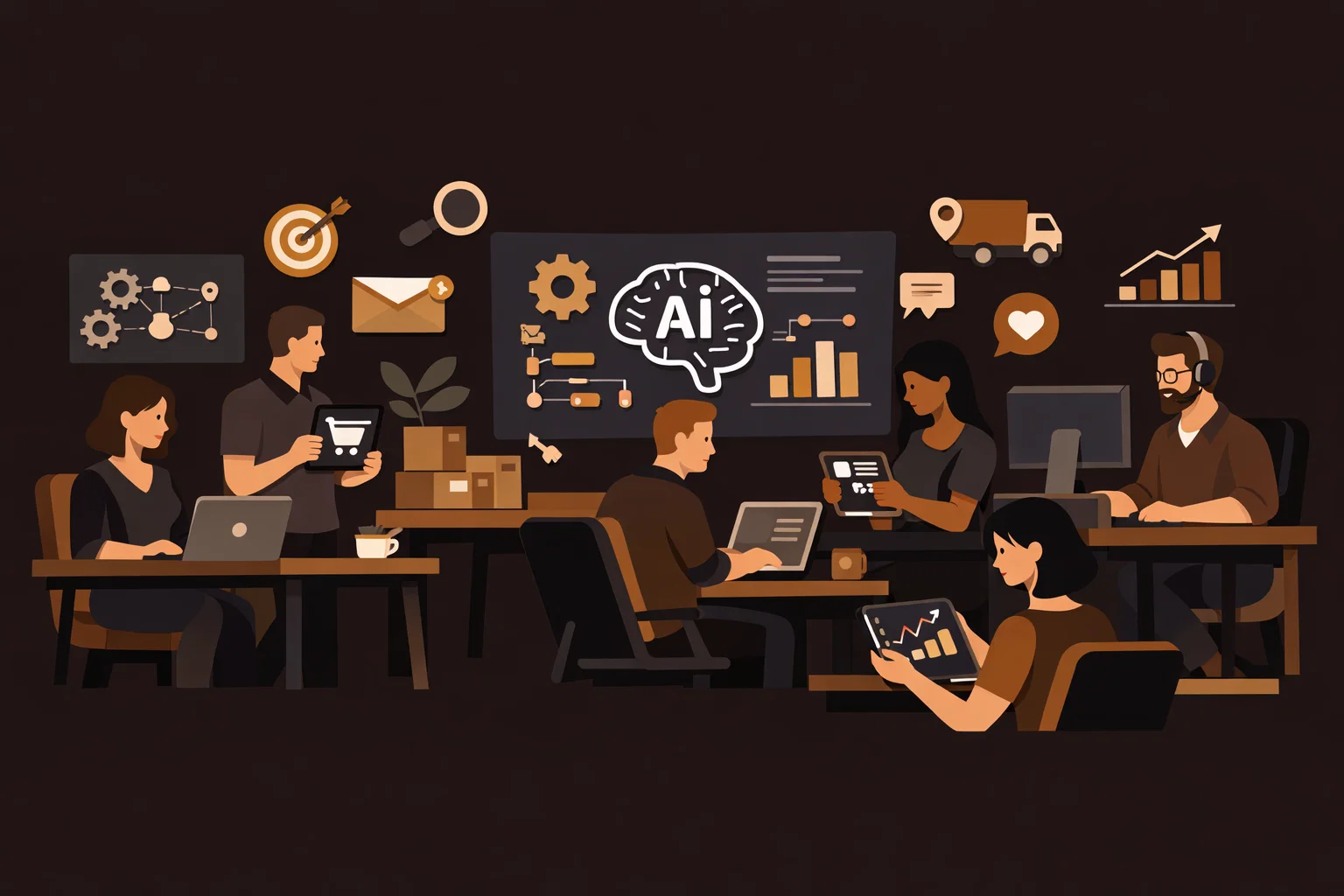

As small and medium businesses (SMBs) look to scale in 2026, operational efficiency has become a top priority. Integrating AI into core business processes allows companies to automate tasks, reduce errors, and make smarter decisions. From marketing and sales to customer service and analytics, AI integration ensures that data flows seamlessly between systems, optimizing every aspect of operations. This article highlights five practical ways AI integration can transform business operations and drive growth.
Why AI Integration Matters for SMBs
AI integration isn’t just about adding new technology—it’s about connecting existing systems in a way that enhances efficiency and productivity. By integrating AI into workflows, SMBs can:
- Eliminate manual tasks: Reduce repetitive work and free up staff for higher-value activities.
- Enhance decision-making: Use AI-driven insights to guide strategy and daily operations.
- Improve customer experience: Deliver faster responses, personalized interactions, and accurate recommendations.
- Scale seamlessly: Grow operations without increasing headcount proportionally.
A structured approach to AI integration ensures measurable impact across all departments.
1. Automate Workflow Processes
AI integration enables businesses to automate routine workflows across departments. Platforms like Zapier, Integromat (Make), and Workato connect multiple tools, allowing data to move seamlessly between systems without manual intervention. For example:
- Automatically update CRM records when new leads are captured
- Trigger email or SMS notifications based on user behavior
- Generate reports and dashboards automatically
Benefits:
- Reduces manual errors
- Saves time and resources
- Ensures consistent operations across teams
2. Enhance Data Accuracy and Insights
Manual data entry is prone to errors, which can disrupt business processes. AI systems integrated with existing tools can validate, analyze, and consolidate data in real-time. By leveraging AI-driven analytics platforms, SMBs can uncover patterns, forecast trends, and make actionable decisions.
Benefits:
- Accurate, real-time data for decision-making
- Identifies trends and opportunities quickly
- Supports strategic planning and optimization
3. Streamline Customer Engagement
Integrating AI into customer-facing systems, such as chatbots, voice agents, and CRM platforms, ensures seamless interactions. AI can capture leads, provide instant responses, and deliver personalized experiences based on customer history and preferences. This integration reduces response time and increases engagement without increasing staffing costs.
Benefits:
- Faster customer service
- Higher engagement and satisfaction
- Increased lead conversion rates
4. Optimize Marketing and Sales Processes
AI integration allows SMBs to connect marketing automation platforms, sales tools, and analytics systems. This ensures that campaigns, leads, and sales activities are synchronized and optimized. For instance, AI can automatically score leads, prioritize high-value prospects, and trigger follow-ups, resulting in improved conversion rates.
Benefits:
- Streamlined lead management
- Increased sales efficiency
- Better marketing ROI
5. Support Scalable and Agile Operations
As SMBs grow, integrating AI ensures operations can scale without proportional increases in staff or resources. AI can monitor workflows, predict bottlenecks, and suggest optimizations. Whether it’s finance, HR, supply chain, or customer support, AI-driven integration helps businesses remain agile and responsive.
Benefits:
- Scales operations efficiently
- Enhances agility and responsiveness
- Reduces operational costs while increasing productivity
Best Practices for AI Integration
To maximize the impact of AI integration, SMBs should consider the following:
- Map existing processes: Understand workflows and identify areas for automation.
- Choose compatible tools: Ensure AI platforms integrate with your current software stack.
- Focus on measurable outcomes: Track KPIs to monitor performance and ROI.
- Train your team: Provide adequate training to ensure smooth adoption of AI systems.
- Continuously optimize: Use AI analytics to refine processes and enhance efficiency.
A structured approach ensures that AI integration delivers maximum value and minimizes disruption.
How AI Automation Experto Can Help
At AI Automation Experto, we specialize in helping SMBs integrate AI into business operations. Our services include:
- Workflow automation across marketing, sales, and customer service
- Integration of AI tools with existing CRM, ERP, and communication platforms
- Data analysis and insights to optimize operations
- Custom AI solutions tailored to your business needs
Explore our pricing plans here or request a custom AI integration plan here. For queries or support, contact us here.
Key Takeaways
- AI integration is essential for SMBs to enhance operational efficiency in 2026.
- Automating workflows, improving data accuracy, and streamlining customer engagement drives productivity and revenue.
- Connected marketing, sales, and analytics systems improve ROI and decision-making.
- AI enables scalable, agile operations without proportional increases in staff or resources.
By strategically integrating AI, SMBs can optimize processes, deliver superior customer experiences, and achieve sustainable growth.